Our Events
Unless otherwise stated, monthly talks are held in the Assembly Hall at the Subud Centre. Doors open at 7:00pm and our meetings start at 7:30pm. Our meetings include a refreshment break with complimentary refreshments. Everyone is welcome.
Free entry for members. Non-members pay £4.00 at our talks, with free entry for anyone under 18 when accompanied by a responsible adult on a one-to-one basis. Accompanying adults must be members or fee-paying guests. Age restrictions and different fees may apply at other venues and events.
Forthcoming Events
Select an event to see full details.
Wednesday 4th November 2026, 7:30pm–9:30pmAdventures with a Smart Telescope & Entry points to AstrophotographyPaul Whitmarsh & Taylor HughesSubud Centre, Lewes BN7 2DS
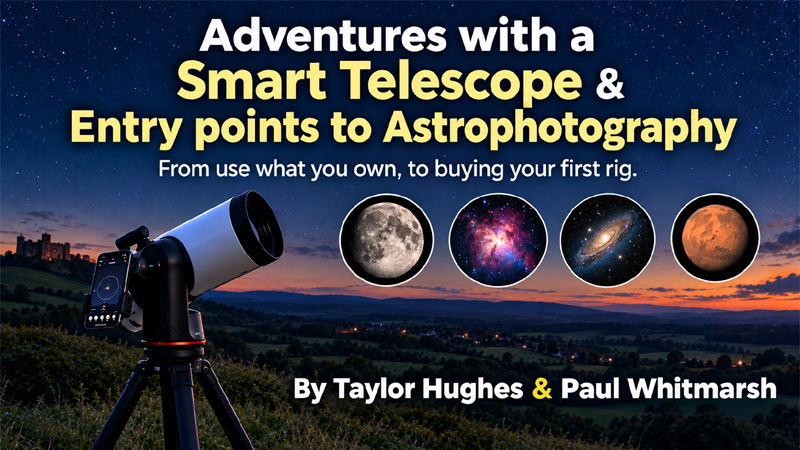
Ever wondered what you can achieve in astrophotography without spending thousands of pounds on a telescope and a mountain of complicated equipment? This talk explores the many ways into astrophotography, from making the most of the camera and equipment you already own, through to using today's increasingly capable smart telescopes and building your first dedicated astrophotography rig.
Along the way, we'll look at the speakers' adventures with a smart telescope, the surprising images these compact, automated instruments can produce, and what it's really like to use one under the night sky. We'll also explore the different routes into astrophotography, the equipment you actually need, common pitfalls to avoid, and how to decide where to spend your money as your interests and skills develop.
Whether you're a complete beginner, a visual observer curious about taking your first images, or someone considering investing in more advanced equipment, this talk aims to show that there is an entry point for everyone – and that you may already own more of the necessary kit than you think.
Saturday 7th November 2026, 8:30pm–11:00pmCommunal Stargazing EveningBarcombe Village Hall, Barcombe BN8 5BH
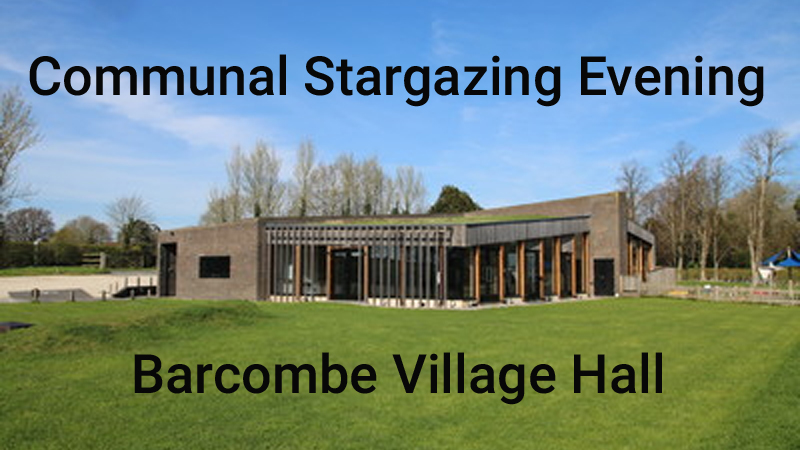
Join us for our first stargazing evening of the season at Barcombe Village Hall, Barcombe Mills Road from 8.30pm until 11pm. Non-members are welcome. Admission is free for everyone. Adults only please, unless pre-arranged with Jane Penny at secretary@lewesas.org.uk. Bring your own telescope, which we can help set up if you wish. LAS scopes will also be available for everyone to use.
We will be located outdoors in the car park, which offers stable ground for telescopes away from dew, wet grass and mud. Ensure you park along the right hand side as you enter and follow any parking instructions given, to keep the area near the hall clear for the setting up of scopes. To protect everyone's night vision, we request that drivers turn off headlights and internal car lights as soon as it is safe to do so. Red light torches are recommended to preserve dark adaptation of our eyes; please do not use white light torches. It can take up to 20 minutes for our eyes to fully adjust to the dark, but exposure to bright light can undo this almost instantly.
We will have access to the toilets in the hall, but kindly remove footwear if you enter the building. Bring your own refreshments and warm clothing.
We may have to cancel this event if the weather is unsuitable. Please check online about 2 hours before the event.
Wednesday 2nd December 2026, 7:30pm–9:30pmSimulating the UniverseProf Stephen WilkinsSubud Centre, Lewes BN7 2DS
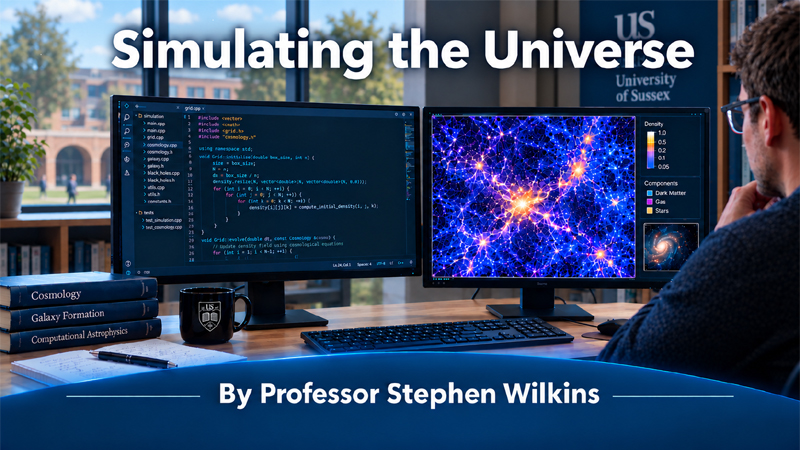
How do galaxies form? Why do stars gather into vast cosmic webs? And what role do dark matter and black holes play in shaping the Universe we see today? While telescopes allow us to observe the cosmos, another powerful approach is to recreate it inside a computer.
In this talk, LAS President Prof Stephen Wilkins will show how astronomers build virtual universes by combining the laws of physics with some of the world's most powerful supercomputers. Starting just after the Big Bang, these simulations follow the growth of cosmic structure over billions of years, revealing how galaxies, stars, and black holes form and evolve. He will explain how these virtual universes help us interpret observations from telescopes such as the James Webb Space Telescope and how they are guiding the next generation of discoveries. Along the way, we will explore both what simulations can tell us and the mysteries they have yet to solve.
Saturday 19th December 2026Communal Stargazing Evening (TBC)Barcombe Village Hall, Barcombe BN8 5BH
Event to be confirmed.
Wednesday 6th January 2027, 7:30pm–9:30pmPlease Don't Light Me UpDoug EdworthySubud Centre, Lewes BN7 2DS
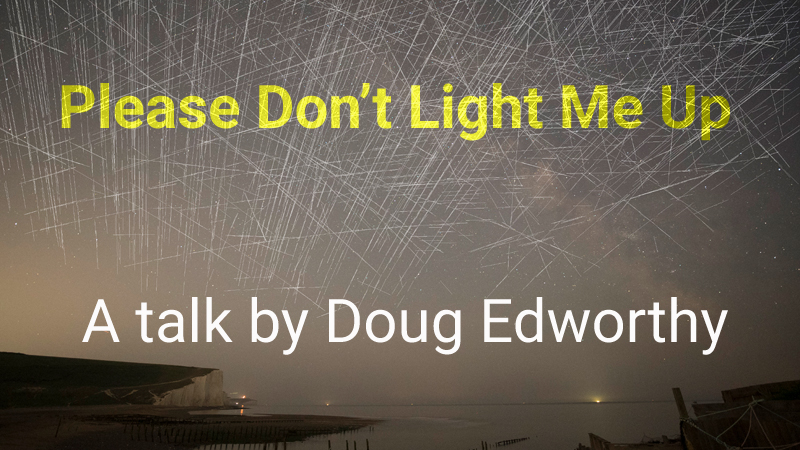
This talk is about ALAN. No, not a person, rather Artificial Light At Night. Doug will explain what ALAN is, how it impacts the night sky, astronomy, wildlife and ecosystems, human health, public safety and energy, climate, and equity. The talk will demonstrate the effects of light pollution on the night sky, ranging from the best possible skies through to a heavily polluted inner city. But it's not all doom and gloom, along with the problems, the talk will discuss ways we can all help mitigate ALAN (poor chap) and ensure future generations can marvel at our glorious clear skies.
Saturday 30th January 2027Communal Stargazing Evening (TBC)Barcombe Village Hall, Barcombe BN8 5BH
Event to be confirmed.
Wednesday 3rd February 2027, 7:30pm–9:30pmMonthly MeetingSubud Centre, Lewes BN7 2DS
Details to follow.
Saturday 20th February 2027Communal Stargazing Evening (TBC)Barcombe Village Hall, Barcombe BN8 5BH
Event to be confirmed.
Wednesday 3rd March 2027, 7:30pm–9:30pmMonthly MeetingProf Sanjeev GuptaSubud Centre, Lewes BN7 2DS
Details to follow.
Saturday 27th March 2027Communal Stargazing Evening (TBC)Barcombe Village Hall, Barcombe BN8 5BH
Event to be confirmed.
Wednesday 7th April 2027, 7:30pm–9:30pmThe Deep Space NetworkRichard ButchersSubud Centre, Lewes BN7 2DS
For more than 60 years, NASA's Deep Space Network has provided the vital communications link between Earth and spacecraft exploring the Solar System and beyond. But how does it actually work, and how do we communicate with spacecraft millions or even billions of kilometres from Earth?
This talk traces the history of the Deep Space Network from its origins in the early days of space exploration to its role today. We'll discover how its huge radio antennas communicate with distant spacecraft, track their movements and receive the faint signals carrying scientific data back to Earth.
Along the way, we'll explore some of the remarkable missions that have depended on the network, including the pioneering voyages of the Voyager spacecraft, missions to Mars, the outer planets and asteroids, and spacecraft venturing into the most distant reaches of the Solar System. We'll look at the challenges of communicating across such enormous distances, the ingenious technology used to overcome them, and some of the tense moments when a spacecraft's survival or success depended on receiving – or sending – a crucial signal.
The talk offers a fascinating insight into the largely unseen infrastructure behind planetary exploration and the extraordinary achievement of maintaining contact with robotic explorers across the Solar System.
Wednesday 5th May 2027, 7:30pm–9:30pmPictures in the sky - The origin and history of the constellationsIan RidpathSubud Centre, Lewes BN7 2DS
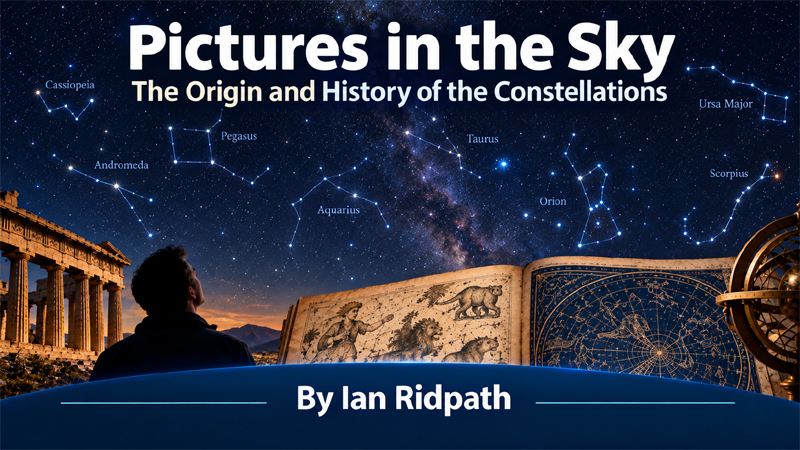
In the days before writing, storytellers used the sky as a picture book to illustrate their tales of gods, mythical heroes and fabulous beasts. Those pictures among the stars were the origin of our system of constellations. Today, the entire sky is divided into 88 constellations of varying shapes and sizes. This talk, which includes illustrations from some of the world's greatest star atlases, will trace the origin of the constellation system back to Greek times and explain who filled in the gaps between the ancient Greek figures, who decided on the official boundaries between constellations, and how the names of certain stars came about.
Wednesday 2nd June 2027, 7:30pm–9:30pmAGM & Capturing the Sun from Cold War Nuclear BunkersNick SayersSubud Centre, Lewes BN7 2DS
Everyone is welcome to attend our AGM, which will precede our main talk of the evening.
Science-artist Nick Sayers has been searching for abandoned nuclear bunkers left over from the Cold War. He plans to install reproduction 'Ground Zero Indicator' pinhole cameras atop these sites, to photograph sun tracks over the rural British landscape. Such cameras were used by the Royal Observer Corps from 1954-1991 in readiness for recording the location of nuclear bomb explosions.
Monday 21st June 2027, 8:00pm–10:00pmSummer Solstice walk up Malling HillMalling Down Nature Reserve

Join us for a free and informal walk up Malling Hill in Lewes to celebrate the Summer Solstice, which this year falls on Monday 21st June. Weather permitting, we can enjoy the breathtaking view of the Ouse Valley while the sun goes down. This is a free event for everyone. More details nearer the time.
Find Us
Our monthly meetings are held at the Lewes Subud Centre.
We meet in the Assembly Hall, usually on the first Wednesday of each month (except July and August). The venue entrance is in Talbot Terrace, Lewes, East Sussex BN7 2DS. Doors open at 7:00pm for a 7:30pm start.
Parking: The nearest public parking is at Brook Street Car Park, about a three-minute flat walk from the Subud Centre. Municipal car parks in Lewes are free after 5pm.
Other events will likely be located elsewhere, so please check the address shown in the event details.
Latitude 50.8765N Longitude 0.00835E /// tripled.collide.flattens
Previous Events
All of our previous events are archived here.
Select a season title to see all its events.
2026 to 2027 season
Click on an event heading to see the full details of that event.
7th October 2026Stars & Stoolball - A Short History of Herstmonceux ObservatoryIan WhiteleySubud Centre, Lewes BN7 2DS
Herstmonceux has played a remarkable role in the history of British astronomy. From the construction of the Royal Greenwich Observatory's new home in Sussex in the 1950s, through decades of pioneering astronomical research, to its transformation into the Observatory Science Centre and Museum, the site has witnessed some fascinating chapters in the story of astronomy.
Ian will take us on a short journey through the history of the Observatory, exploring why the Royal Greenwich Observatory moved from Greenwich to Herstmonceux, and some of the important astronomical work carried out there. We'll discover what life was like for the astronomers and staff who worked at the site and hear about the people, discoveries and events that helped establish Herstmonceux as an important centre for British astronomy.
The talk will also look at the Observatory's later history, including the move of the Royal Greenwich Observatory to Cambridge and the eventual creation of the Science Centre, which today allows visitors to explore many of the original buildings and instruments.
Ian is generously donating his speaker's fee to the Science Centre, helping to support the preservation of this unique piece of Britain's astronomical heritage.
2nd September 2026The Flat Earth ConspiracyGreg Smye-RumsbySubud Centre, Lewes BN7 2DS
For our first talk to kick off our new season, we'll look at the absurd belief that the Earth is flat despite a Greek astronomer, Eratosthenes, having calculated the circumference of the Earth over 2,200 years ago.
Sadly, that the Earth might actually be flat has gained momentum in recent years, perhaps because of a general mistrust in the established way society has been going. In this talk, Greg kicks out some of the more obvious aspects of the conspiracy and sets those thoughts against the science that has proved otherwise for centuries.
2025 to 2026 season
Click on an event heading to see the full details of that event.
26th August 2026Landport Residents Association PicnicEridge Green, Landport Estate, Lewes BN7 2SY
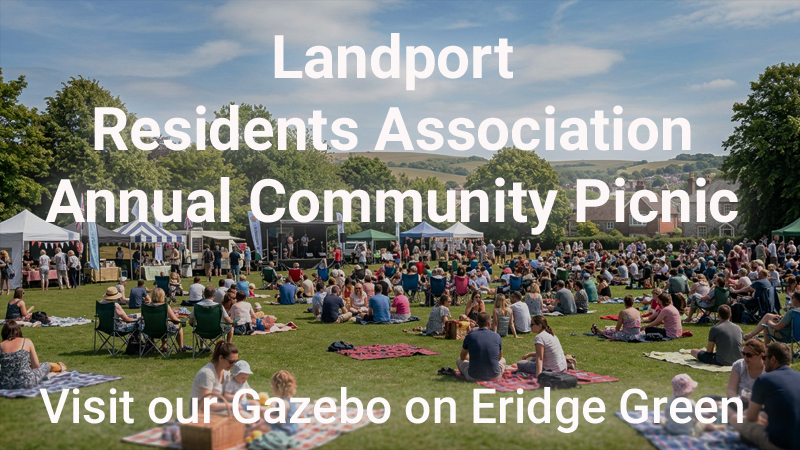
The LAS will have a stand at the Eridge Green Annual Community Picnic, a free event organised by the Landport Residents Association, which starts at 5pm and ends at 7pm. Pop by our gazebo, enjoy our family-friendly activities and look through our solar scope. Eridge Green (///define.metro.flagpole) is a street in the Landport area of Lewes (between the A2029 Offham Road and the River Ouse). For this event, Eridge Green street will be closed to traffic from its junction with Lee Road to its junction with Horsfield Road. Everyone is welcome.
12th August 2026Partial Solar Eclipse6:00pm to 8:10pmSeaford Seafront, BN25 1JH
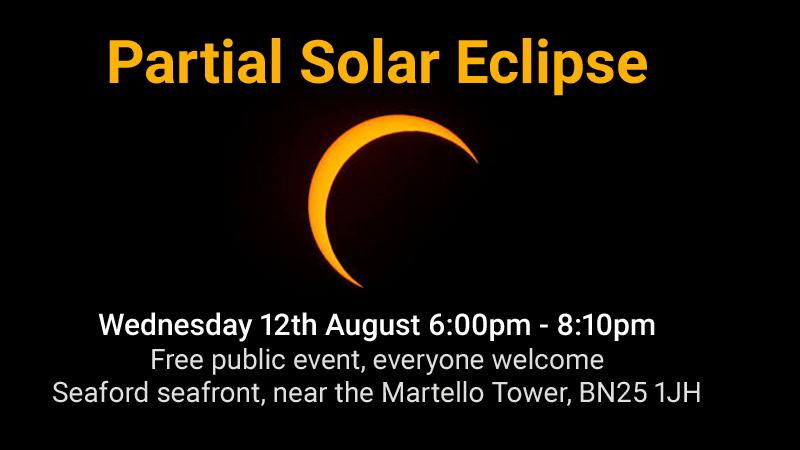
A free family-friendly event to view a partial eclipse of the Sun from Seaford seafront, near the Martello Tower at the eastern end of the esplanade. We have been granted special permission by Seaford Town Council to hold this event in a busy public area, and the Deputy Mayor of Seaford, Councillor Rod Buchanan, will be joining us.
About 91% of the Sun will be obscured by the Moon at maximum as seen from Seaford. The opportunity to witness such a deep partial solar eclipse won't happen again in the UK for many decades.
Locally, the eclipse begins at 6:17pm, reaches maximum at 7:13pm, and ends at 8:06pm. Our team of volunteers will be on hand to share this amazing experience, using specialist equipment to enable visitors to safely observe the eclipse, including solar eclipse glasses, specially filtered telescopes, a hydrogen-alpha solar scope and even a kitchen colander!
It is extremely dangerous to look directly at the Sun without specialist solar viewing equipment at any time, including during this event. Ordinary sunglasses, cameras and binoculars can severely damage your eyes and cause permanent blindness.
Parking is free and plentiful near the Martello Tower. By public transport, there are half-hourly direct trains to Seaford from Lewes and from Brighton.
We are delighted that Seahaven FM radio is supporting this event. Their Drive Time presenter, Clive Mellor, will broadcast live from the event. You can find Seahaven FM radio on 96.3 and 95.6 MHz, online at www.seahavenfm.radio, and via TuneIn by asking your smart device.
5th August 2026Beer Flight7pmJohn Harvey Tavern, Lewes BN7 2AN
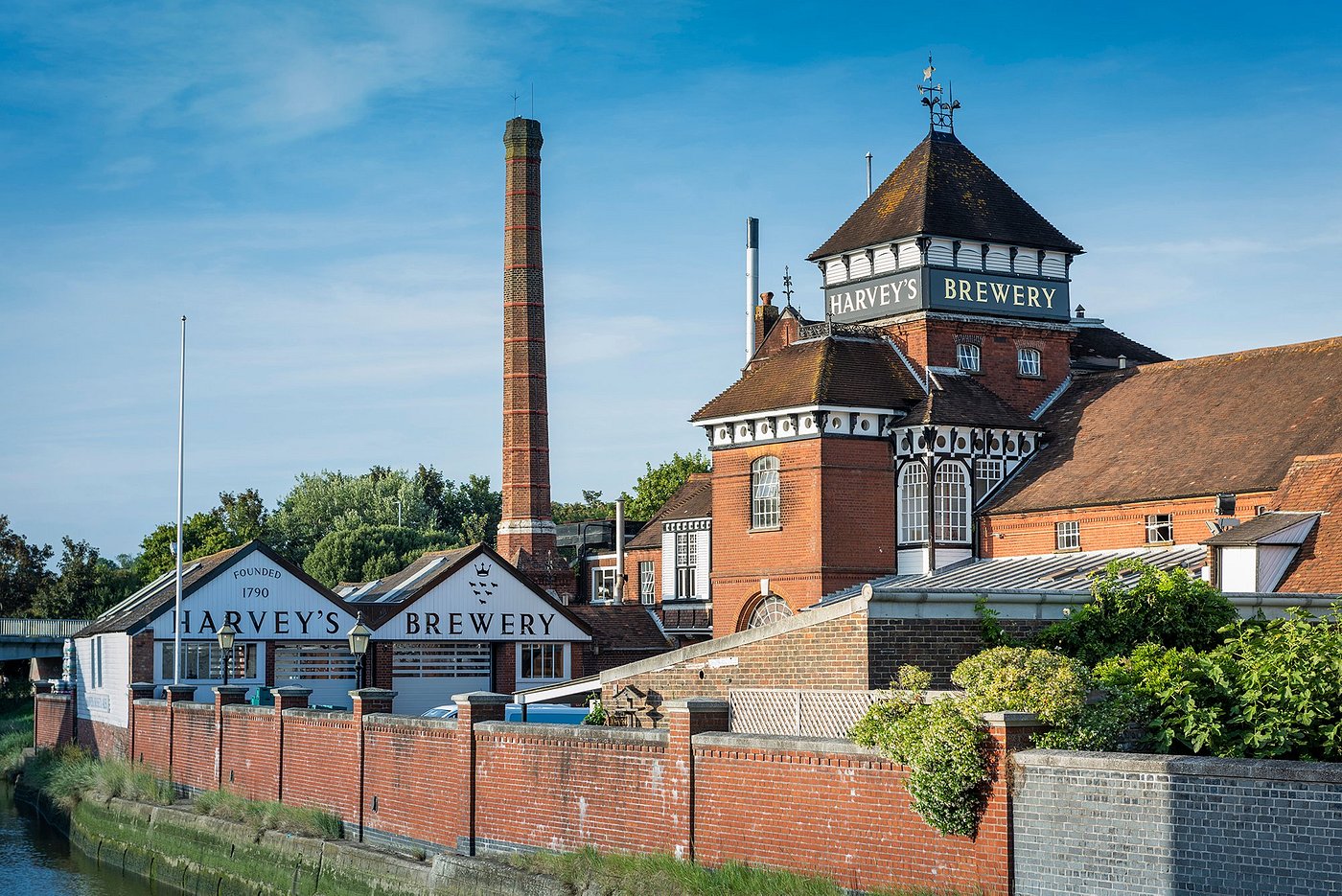
We're delighted to invite all participants of our recent Harvey's Brewery Tour to continue the experience with an informal evening at the John Harvey Tavern, which offers a great-value beer flight for just £5.00 per person. You'll receive three one-third pint glasses and can choose any three different Harvey's beers from the ten available at the bar. One of these beers is exclusive to the John Harvey Tavern, making this a perfect opportunity to try a brew you can't get anywhere else. You're welcome to buy additional flights throughout the evening. There's also a special offer for wine lovers. Advanced bookings only. For more information, please contact Judith Pyett.
1st July 2026Guided Tour of Harvey's Brewery6:15pm to 8:15pm-ishHarvey's Brewery, Lewes BN7 2JW
Now a staple event in our annual programme is our social evening tour at Harvey's Brewery in Lewes. Steeped in tradition, Harvey's is the oldest independent brewery in Sussex. Experience an engaging 90-minute private guided tour around the wonderful historic building and then enjoy tasting a variety of beers to conclude the evening, all included with your ticket. The normal ticket price is £18. However, we have arranged special discounted prices of £15 for non-members and just £12 for LAS members. This is amazing value. Strictly adults only. See our Harvey's Brewery Tour webpage for full details. Tickets are on sale now, subject to availability. Please contact events@lewesas.org.uk to book your tickets.
21st June 2026Summer Solstice walk up Malling Hill8pm to 10pm-ishMalling Down Nature Reserve
Once again, we are holding a free and informal gathering on the Lewes downland to celebrate the Summer Solstice, which this year falls on Saturday 21st June. Weather permitting, we will have the opportunity to enjoy the breathtaking view of the Ouse Valley while the sun goes down. This is a free event for everyone. See our Summer Solstice 2026 Sunset webpage for full details.
3rd June 2026AGM, followed by Neutrinos - The Quest for the Ghost ParticleTony GwytherSubud Centre, Lewes BN7 2DS
The discovery of X-rays in 1895 by Wilhelm Röntgen, of radioactivity by Henri Becquerel the following year, and of the negatively-charged electron by J. J. Thomson in 1897, turned our understanding of the world of the atom upside-down. That same year, Ernest Rutherford, discovered two further types of radioactivity that differed from X-rays in their penetrating powers; these he termed 'alpha rays' and 'beta rays (he later found a third type of radiation, with even greater penetration, 'gamma rays'). He was later to identify that the nucleus of a hydrogen atom is a positively charged particle: the proton.
Conservation of energy had been known for many decades; it is the principle underscoring the First Law of Thermodynamics. In 1905, Albert Einstein formulated his famous equation, E=mc2 in his Theory of Special Relativity, which postulated how energy could be stored and transferred. Radioactivity is an example of E=mc2. When alpha and gamma decay occurs, energy is conserved but with beta radiation, where electrons are created during nuclear transmutation, this doesn't seem to be the case, and a fixed value for the energy of the electron emitted is not seen. Although he was regarded as relatively minor, and ignored by many physicists at the time such as Neils Bohr, the young and brilliant Austrian theorist, Wolfgang Pauli, refused to believe that energy conservation did not occur and proposed that an unknown particle took away the missing energy. This particle must be neutrally charged and with little or no mass: he named it the 'neutron'. A few years later, James Chadwick discovered the true neutron, at the heart of the nucleus, much the size and mass of the heavy proton. It was Enrico Fermi who took up Pauli's idea, developed the theory, and renamed Pauli's neutron as the 'neutrino' (the little neutral one). It took a further 25 years before real neutrinos were observed by Fred Reines and Clyde Cowan, and the work of a lifetime by Ray Davis and others on solar neutrinos before the nature of the elusive neutrino was ultimately revealed. This is their story.
6th May 2026Mapping the Universe: A Journey Through the Past, Present, and Future of Sky SurveysBehnood BandiSubud Centre, Lewes BN7 2DS
For centuries, astronomers have been mapping the night sky. We began with star catalogues made by eye, and we now have digital surveys that measure billions of stars and galaxies. Each new survey has changed what we know about the Universe: it has revealed the shape of the Milky Way, found exploding stars and incredibly powerful collisions, and helped show that the expansion of the Universe is speeding up.
In this talk, we'll go on a journey through the story of sky surveys and see how they shape modern astronomy. We'll start close to home with surveys of our own Galaxy, including the Gaia survey. We'll then look at surveys that keep watch for sudden events in the sky, from supernovae to other short-lived flashes. After that, we'll travel farther out to surveys that map distant galaxies to trace the cosmic web and learn about dark matter and dark energy. Finally, we'll arrive at the next generation of major projects—q4MOST, DESI, LSST, and Euclid—which will build the most detailed maps of the cosmos yet. Together, they will help us tackle some of the biggest questions in astronomy: How did galaxies grow over time? What is dark energy? And how does our Milky Way fit into the Universe?
25th April 2026Communal Stargazing EveningBarcombe Village Hall, Barcombe BN8 5BH
Join us for a free and friendly stargazing evening at Barcombe Village Hall, Barcombe Mills Road, Barcombe, BN8 5BH. You're welcome to bring your own telescope which, if you wish, we can help set up. LAS scopes will be set up for everyone to use if the skies are clear. 9pm until 11pm. Admission is free for everyone. Adults only please, unless pre-arranged with Jane Penny at secretary@lewesas.org.uk.
To protect everyone's night vision, we ask drivers to use side lights only (no headlights) in the village hall car park, and follow any parking instructions provided. Part of the car park is used for stargazing.
We also recommend bringing a red-light torch rather than a white-light one, as this helps preserve dark adaptation. It can take up to 20 minutes for our eyes to fully adjust to the dark, but exposure to bright light can undo this almost instantly.
We cannot provide drinks at this event, so please bring a thermos flask and any snacks you want. Toilets are available. The weather forecast is good, so we look forward to seeing you tonight.
1st April 2026Rocket Man - Wernher von BraunRichard ButchersSubud Centre, Lewes BN7 2DS
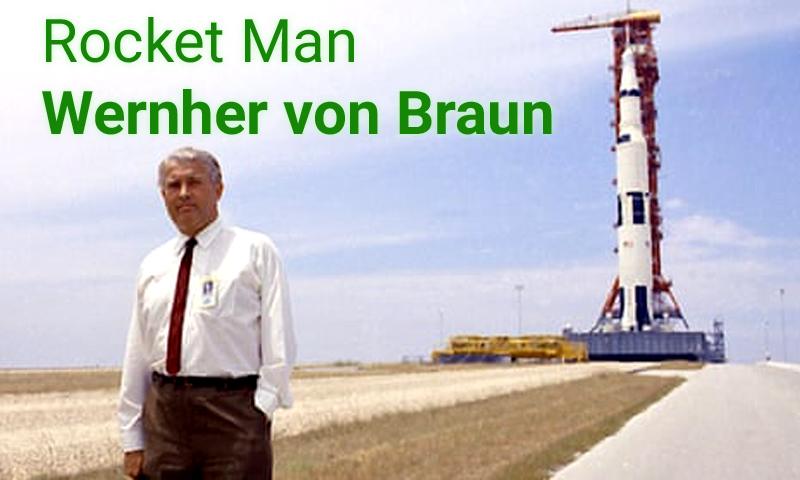
On Wednesday 1st April, LAS member Richard Butchers is giving a talk about the rocket scientist Wernher von Braun at the Subud Centre in Lewes.
Wernher von Braun was the German man mainly responsible for the V-2 rockets launched against the allies during the Second World War. In the final days of the war, von Braun and his group of rocket scientists surrendered to the American army. Subsequently, he became the leading figure behind the NASA rockets that took mankind to the Moon. He had been a Nazi Party and SS member who utilised slave labour from concentration camps, making his legacy controversial. It's a fascinating story.
27th March 2026Communal Stargazing EveningBarcombe Village Hall, Barcombe BN8 5BH
Join us for a free and friendly stargazing evening at Barcombe Village Hall just north of Lewes. You're welcome to bring your own telescope which, if you wish, we can help set up. LAS scopes will be set up in the car park for everyone to use if the skies are clear. 8:30pm until 10pm. Admission and refreshments are free for everyone. If the weather becomes unsuitable during the event, we may be forced to retire to the Royal Oak pub in Barcombe (BN8 5BA) for a social gathering instead. The event will be cancelled if the weather forecast indicates the evening will be unsuitable for stargazing.
21st March 2026Lewes Space DayMultiple SpeakersAll Saints Centre, Lewes BN7 2LE
The LAS proudly presents an afternoon of astronomy talks, with a cafe, licenced bar and book seller, at the All Saints Centre in Lewes, BN7 2LE. We are delighted to have the brilliant communicator and space scientist Prof Lucie Green headlining the event, along with Dr Steven Banham, Dr Eva-Maria Mueller, and Prof Stephen Wilkins.
A single talk is only £4, but tickets reduce by 50 pence each for each additional talk you attend. So it's £4 for one, £7 for two, £9 for three, and £10 for all four talks. That is already fantastic value for money, but LAS members also get a discount, so one talk is £3 and it's just £6 for all four talks. Look out for the discount code in our emails, or contact anyone on the committee.
Tickets and further details are available at https://www.ticketsource.co.uk/lewesspaceday.
Please note that the opening comedy performance by local musical legend John Hinton is sold out, but you can join a waiting list on the Ticket Source webpage. The first astronomical talk will start at 3:30pm
Weather permitting, there will be an opportunity to freely and safely observe the Sun through our solar telescope, which will be set up in the grounds of the venue.
If you have any queries, please contact our Outreach Officer, Dr Kate Land, at outreach@lewesas.org.uk, who has organised what promises to be an amazing event.
4th March 2026Particle Physics - LHC ATLASCaley YardleySubud Centre, Lewes BN7 2DS
The long-awaited discovery of the Higgs boson at the Large Hadron Collider (LHC) in 2012 was a landmark moment in particle physics. Responsible for giving the fundamental particles of the Universe their mass and as the 'final' fundamental particle to be found, its discovery provides overwhelming support for the Standard Model. Now it provides LHC physicists a new frontier to precisely map the Universe as it was just after the Big Bang. Since its development in the 1970s, the Standard Model has arguably been the most successful scientific theory ever devised. However, despite overwhelming experimental evidence, we know that it is incomplete. Without the inclusion of gravity, dark matter, or a complete understanding of neutrinos, studies of 'Higgs portals' at the ATLAS experiment are used to search for hints of new physics. One of these is the top quark: the heaviest fundamental particle ever measured. In fact, it is so heavy that it has unique properties which can be exploited to map physics beyond the Standard Model. How by using the Higgs and ATLAS we can advance our knowledge of particle physics and the early universe. Hear how Caley's work on Top quark physics, which relates to the Higgs, is advancing our understanding.
4th February 2026The Quantum UniverseProf Stephen WilkinsSubud Centre, Lewes BN7 2DS
Quantum physics is a fundamental theory that describes the behaviour of nature at and below the scale of atoms. Celebrating 100 years since initial developments, the United Nations proclaimed 2025 as the International Year of Quantum Science and Technology. As part of these celebrations I will introduce how quantum physics is essential to our understanding of the Cosmos, focusing on two examples. First, the process of nuclear fusion is responsible for the majority energy generation in stars; however the temperatures in stellar interiors are too low for this to happen 'classically'. However, the phenomenon of quantum tunnelling enables atomic nuclei to fuse even if they don't have required energies. Second, our Universe is replete with structures in the form of planets, stars, galaxies and clusters. These structures are thought to caused by amplification by the process of inflation of minuscule quantum fluctuations present in the very early Universe. Everyone is welcome. Non-members £4.
7th January 2026An Introduction to ArchaeoastronomyCarina GarlandSubud Centre, Lewes BN7 2DS
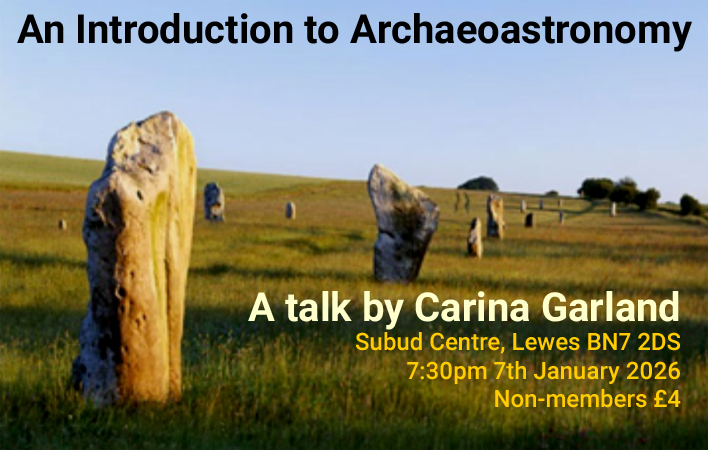
In this talk PhD researcher and Lewes Astronomical Society committee member, Carina Garland, will give an introduction to archaeoastronomy. Ancient monuments throughout the world are aligned to celestial events. How and why did people in the past go to such lengths? The ability to determine key dates in the year is thought to have played a pivotal role in the development of ancient cultures dating back to Neolithic times. It enabled early peoples to establish agricultural cycles, helping them transition from nomadic lifestyles to permanently settled communities. Travel back in time and uncover how ancient skywatchers built monuments that mirrored the movements of the Sun, Moon, and stars. Join Carina as she guides you through the celestial alignments of two major archaeological monuments from British Prehistory. Everyone is welcome. Non-members £4.
13th December 2025Communal Stargazing EveningVillage Hall, Barcombe BN8 5BH
Join us for a free and friendly stargazing evening at our new dark skies site just north of Lewes. You're welcome to bring your own telescope; if you wish, we can help you set it up. LAS scopes will be available for everyone to use if the skies are clear. 8pm until 10:30pm. Car park, admission and refreshments are free for everyone. If the weather proves unsuitable for stargazing, we may move to the nearby Royal Oak pub in Barcombe (BN8 5BA) for a social gathering instead.
3rd December 2025Historical Women in AstronomyDr Sian ProsserSubud Centre, Lewes BN7 2DS
Women have long contributed to our understanding of the universe, though often without recognition. Sian Prosser, Archivist and Librarian at the Royal Astronomical Society, will highlight pioneering women members of the RAS—beginning with Caroline Herschel and Mary Somerville—and explore the lives and legacies of other lesser-known but influential figures in astronomy and astrophysics.
29th October 2025Chasing Shadows: How Scientists Hunt for Dark MatterDr Cenk TurkogluSubud Centre, Lewes BN7 2DS
Dark matter is one of the greatest mysteries in modern physics. Although it makes up most of the matter in the universe, it neither emits nor absorbs light, leaving its presence revealed only through its gravitational effects on galaxies and cosmic structures. In this talk, Dr Cenk Turkoglu will explore what we know about dark matter, why we believe it exists, and how scientists around the world are developing ingenious experiments to detect it. From deep underground detectors to space-based instruments, he will discuss the ongoing global effort to uncover the true nature of this invisible component of our universe and the challenges that make this quest one of the most fascinating frontiers in science today.
1st October 2025Astronomy in WWIDr Peter ChasseaudSubud Centre, Lewes BN7 2DS
Historian of military survey and cartography, Dr Peter Chasseaud examines the way in which astronomy was used in the First World War on land, at sea and in the air, including as part of complex weapons systems culminating in the bombardment of Paris by the Germans in 1918 at ranges up to 130km.
3rd September 2025The UK Fireball Alliance and Fireballs AotearoaJim Rowe FRASSubud Centre, Lewes BN7 2DS
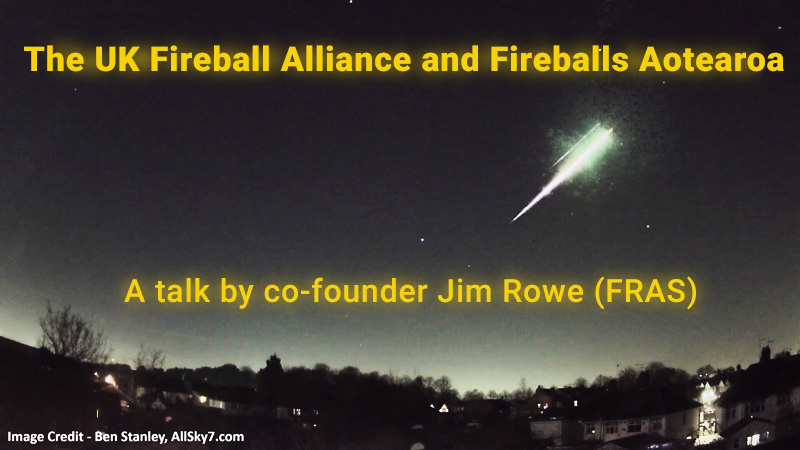
Of 75,000 meteorites worldwide, only about 60 have accurate pre-impact orbits. This includes the UK's 2021 Winchcombe fall and New Zealand's 2024 Tekapo meteorite. Jim Rowe will explain why and how the twin organisations of UKFall and Fireballs Aotearoa are maximising the science done with fireballs, and how you can get involved.
2024 to 2025 season
Click on an event heading to see the full details of that event.
4th July 2025Guided Tour of Harvey's Brewery6:15pm to 8:00pmHarvey's Brewery, Lewes BN7 2JW
Following the sell-out success of this social event last summer, we have arranged another evening tour at Harvey's Brewery in Lewes. Steeped in tradition, Harvey's is the oldest independent brewery in Sussex. Experience an engaging 90-minute private guided tour by Miles Jenner (joint managing director) around the wonderful historic building and then enjoy tasting a variety of beers to conclude the evening, all included with your ticket. £12 for members, £15 for non-members. Adults only. See our Harvey's Brewery Tour webpage for full details. Tickets are on sale, subject to availability, until midday on 4th July.
21st June 2025Summer Solstice walk up Malling Hill8pm to 10pmMalling Down Nature Reserve
Once again, we are holding a free and informal gathering on the Lewes downland to celebrate the Summer Solstice, which this year falls on Saturday 21st June. Weather permitting, we will have the opportunity to enjoy the breathtaking view of the Ouse Valley while the sun goes down. See our Summer Solstice webpage for full details.
21st June 2025Southover Primary School Summer Fair12pm to 3:30pmSouthover High Street, BN7 1JP
The Southover Primary School Summer Fair takes place on the school playing field, with its entrance opposite Southover Grange in Southover High Street, BN7 1JP. To support this free event, LAS volunteers will be there with our Solar Scope and other bits. It's open to the public, with lots of activities for kids, plus a bar and barbeque. The Mayor of Lewes, Councillor Emily Clarke, is attending at 2pm to get splatted in the stocks. Do come along for this free family-friendly afternoon.
4th June 2025AGM plus Impacts in the Solar SystemDr Penny WozniakiewiczSubud Centre, Lewes BN7 2DS
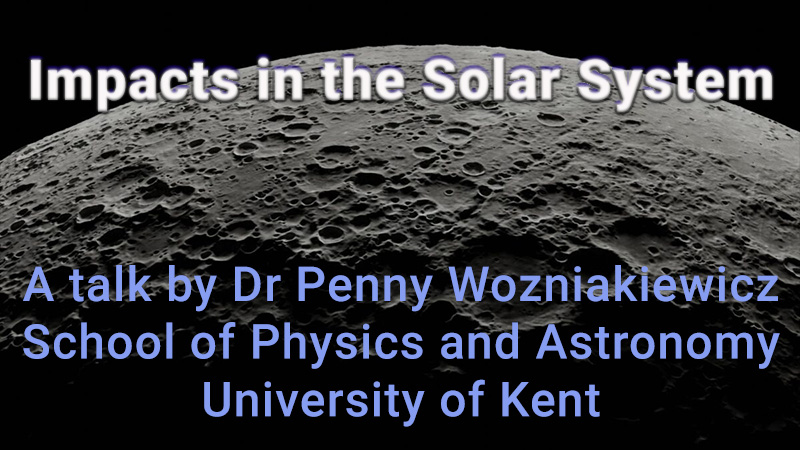
Penny will introduce the fundamental process of impact cratering which has shaped Earth's landscape and even influenced (both positively and negatively) life on our planet over the course of its history. The geologically active nature of the Earth destroys evidence of these impacts over time and today only 190 confirmed impact craters have been identified. Some of the most striking examples will be described before looking out to space at craters on other planets and moons. Impacts not only occur on all bodies, but at all scales and we will therefore also consider the resulting impact hazard posed by dusty particles that pervade our solar system - although the atmospheres of planets like Earth offer protection from these particles by slowing them down or burning them up, airless bodies and indeed spacecraft are constantly at risk of impact by high speed dust. She will also consider some of the ways we are trying to study impacts, with a focus on the experimental research using the two stage light gas gun being performed by her group at the University of Kent.
23rd May 2025Stargazing EveningLewes Old Racecourse, BN7 1UR /// upwards.hesitate.clouding
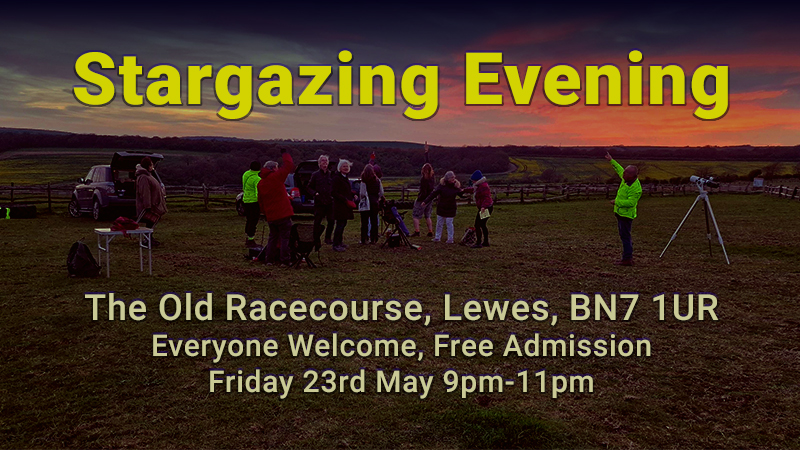
A stargazing opportunity at Lewes Old Racecourse in the South Downs National Park. The venue is in a dark skies area one mile west of Lewes at an elevation of 135 metres. The event takes place between 9pm and 11pm. As usual, car parking and stargazing is in the paddock at the far end of the road up to the racecourse. For everyone's safety, please adhere to any instructions from the marshals. You're encouraged to bring a telescope if you own one. Everyone welcome. Free admission for all. Please wear warm clothing, suitable footwear and bring a red-light torch. We will have the Philip's Stargazing 2025 guidebook on sale for £3 (or free for members). Note that there are no facilities at the venue.
7th May 2025Early British RocketryRichard ButchersSubud Centre, Lewes BN7 2DS
Richard Butchers will discuss the ups and downs of Britain's involvement in the early days of rocketry including the research vehicle Black Arrow and the Blue Streak ballistic missile programme—an insightful and surprising look into the nation's pioneering efforts in space technology. This talk is suitable for everyone.
3rd May 2025Solar Viewing MorningCliffe Bridge, Lewes BN7 2AW
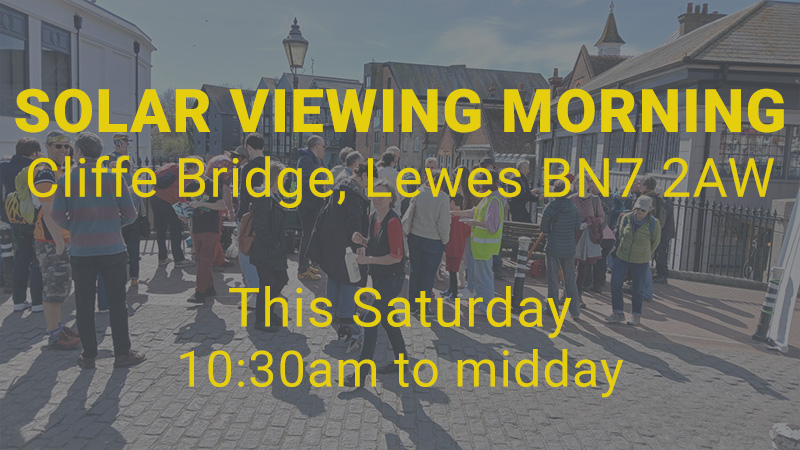
An opportunity for passers-by to safely observe the Sun and see solar activity such as prominences and sunspots using our new hydrogen alpha telescope. Everyone welcome to this free event from 10:30am until midday, weather permitting.
27th April 2025Telescope WorkshopLewes Old Racecourse, BN7 1UR
A morning event this Sunday to test our new Ha Solar Telescope. Everyone is welcome to come along and enjoy safely observing the Sun through this hydrogen alpha telescope which is designed specially for this purpose. Remember, never look directly at the Sun unless the equipment is designed specifically for viewing the Sun. Also, if you would like advice on setting up your own telescope, you are welcome to bring it along. This free outdoor event takes place between 10:30am and 12:30pm. As usual, car parking and workshop is in the paddock at the far end of the road up to the racecourse. We will have the Philip's Stargazing 2025 guidebook on sale for £3 (or free for members). Note that there are no facilities at the venue and, being outdoors, the event may be cancelled if the weather is unsuitable.
25th April 2025Stargazing EveningLewes Old Racecourse, BN7 1UR
A stargazing opportunity at Lewes Old Racecourse in the South Downs National Park. The venue is in a dark skies area one mile west of Lewes at an elevation of 135 metres. The event takes place between 9pm and 11pm. As usual, car parking and stargazing is in the paddock at the far end of the road up to the racecourse. For everyone's safety, please adhere to any instructions from the marshals. You're encouraged to bring a telescope if you own one. Everyone welcome. Free admission for all. Please wear warm clothing, suitable footwear and bring a red-light torch. We will have the Philip's Stargazing 2025 guidebook on sale for £3 (or free for members). Note that there are no facilities at the venue. Regrettably, this event has been cancelled due to cloudy weather. Our telescope workshop is our next event on Sunday 27th April.
2nd April 2025Dark Energy, Cosmology and HiggsProf Nick EvansTown Hall, Lewes BN7 2QS
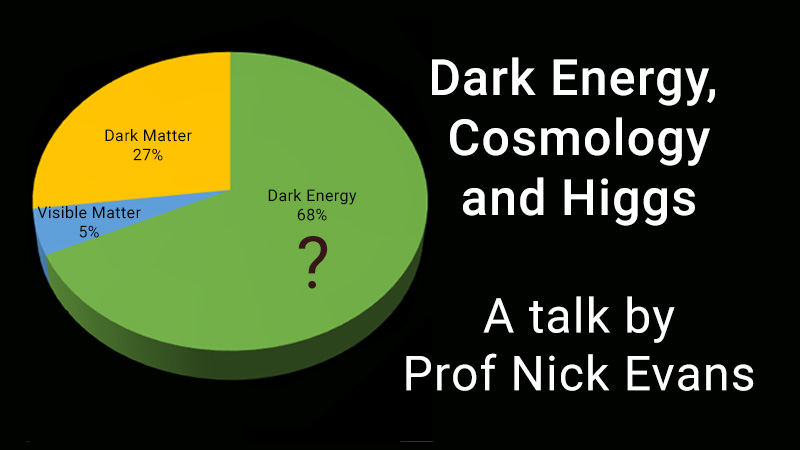
Dark Energy is the biggest mystery in modern physics - it is a gravitating energy associated with otherwise empty space. Astronomers need it to explain the accelerating expansion of the Universe. Particle Physicists find many sources of it that are apparently far too big, including the Higgs Boson. Nick Evans, Head of the Southampton High Energy Physics group, will overview the current position and speculate as to where the mystery will lead us. Everyone welcome. Non-members £4.
5th March 2025Project Space Balloon (DNA to the edge of space)Russell FlawnTown Hall, Lewes BN7 2QS
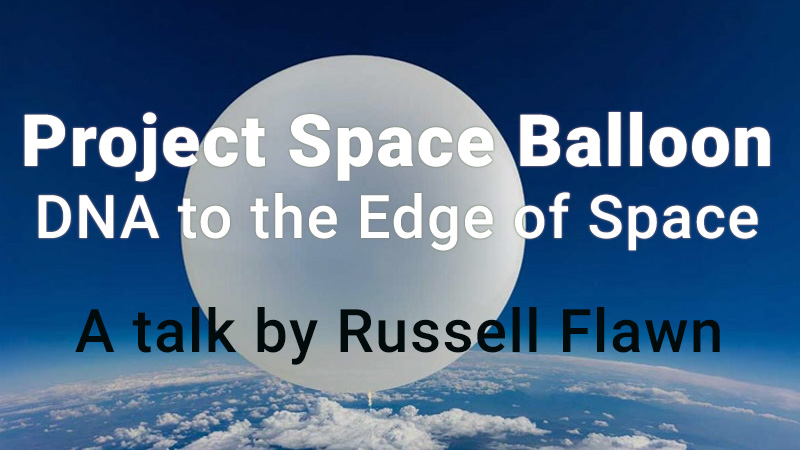
Ever wanted to go to space, like for real? Well, now you can! Come and learn how budding astronauts Louis and Russ launched their DNA to the edge of space... and even managed to retrieve it! Find out exactly how they did it, how you could do it too, and if their DNA has changed because of it. Everyone welcome. Non-members £4.
15th February 2025South Downs Dark Skies Festival Star PartySeven Sisters Country Park Centre, Exceat BN25 4AD
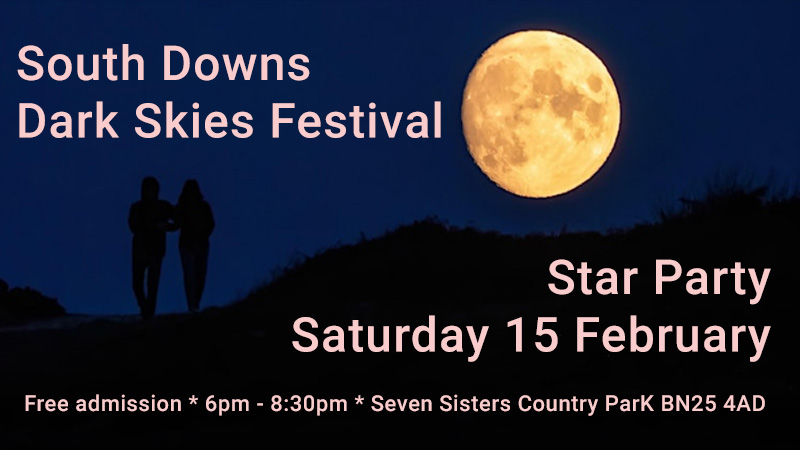
As part of the South Downs National Park Dark Skies Festival this year, the Lewes Astronomical Society is partnering with the South Downs National Park Authority to bring you an unforgettable evening under the stars at the iconic Seven Sisters Country Park between 6pm and 8:30pm on Saturday 15th February.
Begin your journey with our Walk the Planets trail, where the solar system is laid out to scale along an accessible route, accompanied by an engaging audio guide.
Professor Robert Massey, Chair of our society and Deputy Executive Director of the Royal Astronomical Society, will deliver a fascinating talk on The Moon: Art, Science, and Culture, exploring the Moon's impact on human history, science, and artistic expression. Also, dark skies expert Dan Oakley will take us through the history of the Universe using the South Downs Way as a timeline.
There will also be stargazing with telescopes, storytelling, VR headsets, games, and award-winning astrophotography at the Visitor Centre, where you can also enjoy a hot drink and snack deal.
Join the staff of the South Downs National Park for a 1-hour guided night walk through the park. Using UV torches, we'll search for biofluorescent creatures while listening for nocturnal wildlife. This gentle 3km stroll through the woodland offers a unique way to experience the landscape after dark.
This family-friendly event is free for everyone, but car parking charges apply, and booking is required for the 1-hour night walk. For more details see www.southdowns.gov.uk/dark-night-skies/dark-skies-festival.
5th February 2025The Hubble Tension: Is Cosmology in Crisis?Dr Kate LandTown Hall, Lewes BN7 2QS

Kate will discuss the inconsistencies facing our current cosmological model of the Universe. The Hubble tension is a discrepancy between the observed rate of the universe's expansion and the rate expected based on current understanding. The tension suggests that the current model of the Universe might be incomplete. Everyone welcome. Non-members £4.
15th January 2025Exploring the End of the Dark AgesProf Stephen WilkinsTown Hall, Lewes BN7 2QS

In our current understanding, our Universe emerged from an incredibly hot, dense state roughly 14 billion years ago. While initially incredibly hot and full of light, as the Universe expanded it cooled, eventually becoming dark, entering a period known as the cosmological dark ages. During this period dark matter and gas, attracted by the force of gravity, developed into structures, eventually leading to the formation of the first stars and galaxies, lighting up the Universe. This earliest period of galaxy formation is now accessible thanks to the James Webb Space Telescope (Webb). Webb not only allows us to identify examples of early galaxies but learn about their detailed physical properties. Webb has already thrown up surprising results, including many more super-massive black holes in the early Universe than expected. Everyone welcome. Non-members £4.
4th December 2024If Venus had a MoonGreg Smye-RumsbyTown Hall, Lewes BN7 2QS
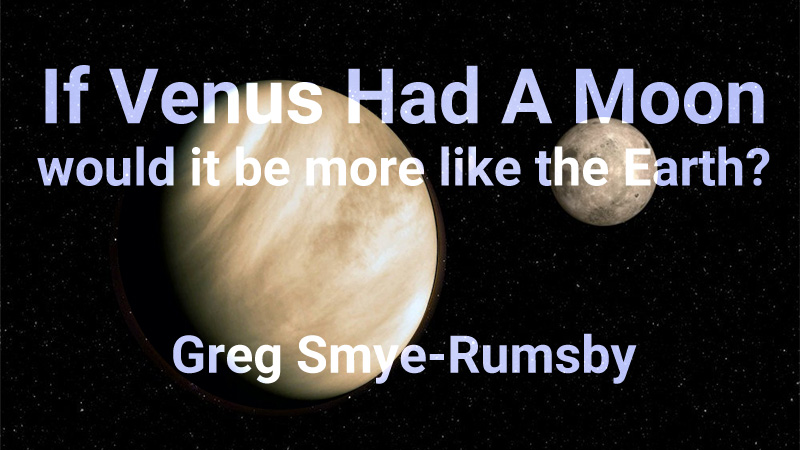
The planet Venus is a fascinating world, a world that should by all accounts be a near twin of the Earth which has continents and oceans, undergoes seasonal changes, and has a moon. However, the reality is very different. The surface of Venus is completely blanketed by dense opaque cloud making observation of surface features impossible. Those starting out to follow their passion in astronomy often take in the changing aspect of Saturn's rings, the storms within Jupiter's clouds and of course the surface features of Mars as it spins on its axis. Venus is not one of the planets favoured by most amateurs BUT what if it had a moon? Everyone welcome. Non-members £3.
16th November 2024Speaker's SymposiumAll Saints Centre, Lewes BN7 2LE
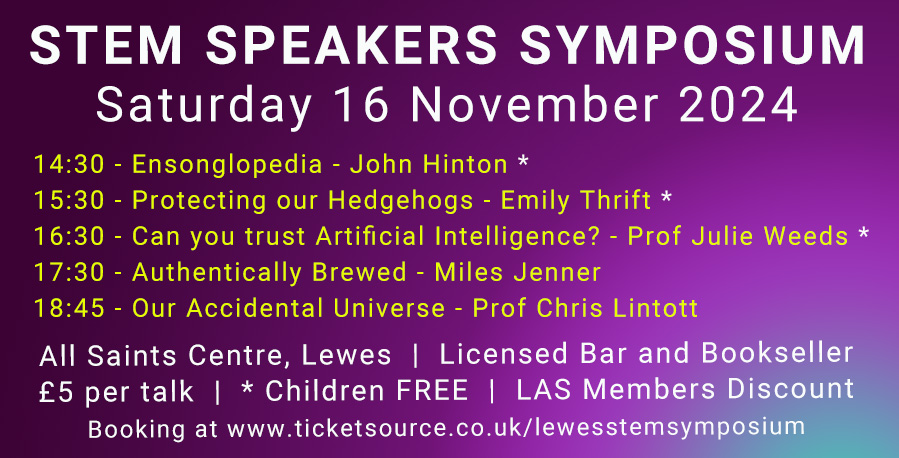
As part of the Lewes STEM Festival this year, we're holding our most ambitious event yet, a special speaker's symposium featuring five talks, culminating with our keynote speaker Prof Chris Lintott, presenter of the BBC television series The Sky at Night. For more information and to book seats for any of the talks, please see www.ticketsource.co.uk/lewesstemsymposium.
6th November 2024Revealing The Unseen Cosmos - How Amateurs Are Contributing To Scientific ResearchPeter Goodhew FRAS - www.imagingdeepspace.comTown Hall, Lewes BN7 2QS

Amateur astrophotographers are making a significant contribution to scientific research, with numerous discoveries that have eluded the professionals. Peter will reveal how he and other enthusiasts are advancing the field, highlighting a recent discovery as a case study. He will showcase some of the most stunning and unusual discoveries that he and his colleagues have made, and provide examples of how the professional community is increasingly turning to amateurs for support. Everyone is welcome. Non-members £3.
25th October 2024Stargazing EveningMembers with a guestOld Racecourse, Lewes BN7 1UR
A practical stargazing event at the Lewes Old Racecourse Heritage Centre in the South Downs National Park. The venue is located in a dark skies area one mile west of Lewes at an elevation of 135 metres. This free event takes place between 8pm and 10pm. Car parking is adjacent to the centre, and members are welcome to bring their own equipment and one guest. Please wear warm clothing, suitable footwear and bring a red-light torch. If we're lucky, we might see the comet!
2nd October 2024The Gaia RevolutionDr George SeabrokeTown Hall, Lewes BN7 2QS

Gaia, a European Space Agency space telescope launched in 2013, has been meticulously mapping individual stars in our Milky Way galaxy. Dr Seabroke, a principal research fellow at the Mullard Space Science Laboratory, will reveal how Gaia's 3 trillion measurements of precise positions, speeds and trajectories of 2 billion stars are revolutionising astronomy. Highlights of the presentation will include the recent discovery of a black hole, Gaia BH3, and its intriguing connection to a personal historical coincidence. Everyone is welcome. Non-members £3.
20th September 2024Stargazing EveningMembers with up to one guestOld Racecourse, Lewes BN7 1UR
Our first stargazing event of the new season at the Old Racecourse Heritage Centre in the South Downs National Park. The venue is located in a dark skies area one mile west of Lewes at an elevation of 135 metres. This free event takes place between 9pm and 11pm. Car parking is adjacent to the centre, and members are welcome to bring their own telescopes and binoculars if they wish. Please wear warm clothing, suitable footwear and bring a red-light torch. Members can bring along one guest only.
4th September 2024The Evolution of GalaxiesDr Will RoperTown Hall, Lewes BN7 2QS

Will is a research fellow at the University of Sussex, specialising in galaxy evolution. He conducts his research by running computer simulations of the universe. In this talk, he will discuss these simulations and the use of the James Webb Space Telescope (JWST) to validate and enhance this research. Everyone is welcome. Non-members £3.
2023 to 2024 season
Click on an event heading to see the full details of that event.
28th August 2024An Evening Under The StarsOld Racecourse Heritage Centre, Lewes
Everyone is welcome to join us for our Evening under the Stars on 28th August at the Old Racecourse Heritage Centre in Lewes. Gather around a cosy fire pit with us, enjoy complimentary delicious hot drinks with marshmallows, and relax as our expert, Professor Robert Massey, leads us on a guided tour of the night sky. For more information please see our Evening Under The Stars event page.
10th July 2024Guided Tour of Harvey's BreweryHarvey's Brewery, Lewes BN7 2JW
This summer, join us for an unforgettable social evening at Harvey's Brewery in Lewes. Steeped in tradition, Harvey's is the oldest independent brewery in Sussex. Experience an engaging 90-minute private guided tour around the wonderful historic building and then enjoy tasting a variety of beers to conclude the evening, all included with your ticket. £12 for members, £15 for non-members. Adults only. See our Harvey's Brewery Tour webpage for full details. Tickets are now SOLD OUT.
20th June 2024Summer Solstice 2024 Outdoor EventMalling Down Nature Reserve
Once again, we are holding a free and informal gathering on the Lewes downland to celebrate the Summer Solstice, which this year falls on Thursday 20th June. Weather permitting, we will have the opportunity to enjoy the breathtaking view of the Ouse Valley while the sun goes down. See our Summer Solstice webpage for full details.
5th June 2024AGM and Observing the Hawai'ian SkiesDarren BaskillTown Hall, Lewes BN7 2QS

Our annual AGM will be followed by a wonderful talk by Dr Darren Baskill. The best places to observe the night sky also have some of the most extreme conditions on the planet. British astronomers have access to telescopes at an altitude of 4,200m on the summit of Mauna Kea, on the Big Island of Hawai'i. Darren's talk is his personal perspective on making astronomical observations in harsh conditions, using various observatories at the top of Mauna Kea. Everyone welcome. Non-members £3.
10th May 2024Stargazing EveningOld Racecourse, Lewes BN7 1UR
Another stargazing opportunity for our members at the Old Racecourse Heritage Centre in the South Downs National Park. The venue is in a dark skies area one mile west of Lewes at an elevation of 135 metres (400 ft). The event takes place between 9pm and 11pm. Car parking is adjacent to the centre, and members are welcome to bring their own telescopes. Please wear warm clothing, suitable footwear and bring a red-light torch.
1st May 2024Capturing the MomentSally RussellTown Hall, Lewes BN7 2QS

Sally Russell is an avid astronomical artist who co-authored Sketching the Moon and Solar Sketching which featured in Patrick Moore's esteemed Practical Astronomy series of books. Practical amateur astronomy has changed markedly over the past few decades, from the isolated amateur telescope maker pursuing a lonely hobby, to today's ready availability of a huge range of equipment and astronomical information, plus the means to easily capture and share digital images. This evolution is described from a personal point of view, the core of the discussion being the constant desire to record observations for posterity and the changing methods being used to enable this, from traditional sketching through to afocal smartphone photography and the new DWARF II smart telescope. Everyone welcome. Non-members £3.
12th April 2024Stargazing EveningOld Racecourse, Lewes BN7 1UR
We have recently secured access to the Old Racecourse Heritage Centre which is located in the South Downs National Park in a dark skies area high above Lewes (135 metres elevation ASL). We will be holding our inaugural stargazing evening at that venue, for members only, between 8pm and 10pm on Friday 12th April. Facilities at the newly converted heritage centre building are not yet complete, so please bring your own drinks. A toilet will be available. Car parking is adjacent to the centre, and members are encouraged to bring their own telescopes. Please wear warm clothing and suitable footwear.
3rd April 2024The Universe in X-rayJessica PillingTown Hall, Lewes BN7 2QS
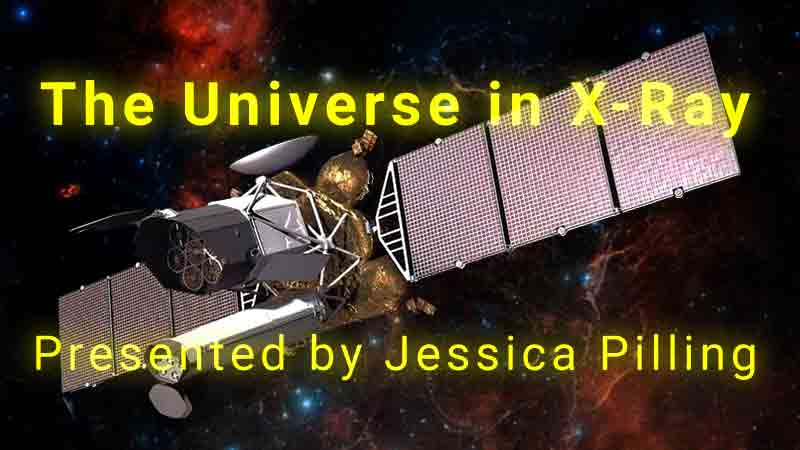
Jessica Pilling will explore the fascinating realm of X-ray astronomy, shedding light on the celestial objects that can be seen in this high-energy band of the spectrum. She will talk about the latest findings of the cutting-edge space-based X-ray telescope, eROSITA, which aims to provide a detailed X-ray survey of the entire sky. She will also provide insights into her own research, namely X-ray studies focused on entire clusters of galaxies.
Jessica's presentation will be followed by a short talk from Behnood Bandi entitled 'Happy New Year' offering an insight into the Solar Persian calendar, which is one of the world's most precise timekeeping systems, and Nowruz, the Persian New Year, highlighting their astronomical foundations and cultural significance. Everyone welcome. Non-members £3.
6th March 2024The Comet Interceptor MissionGeraint JonesTown Hall, Lewes BN7 2QS

Geraint Jones, Professor of Planetary Science at UCL, will talk about an exciting new European Space Agency robotic spacecraft planned for launch in 2029. The spacecraft will be parked at the Sun-Earth L2 Lagrange point where it will wait for up to 3 years for an as-yet undiscovered long-period comet to fly by. It will be the first spacecraft to intercept a long-period comet travelling through the inner Solar System.
Geraint's presentation will be followed by a short talk from Paul Whitmarsh about colour in astronomy. Everyone welcome. Non-members £3.
16th February 2024Stargazing EveningVillage Hall, Arlington BN26 6RX
A joint meeting at Arlington Village Hall with our friends from Eastbourne Astronomical Society. The evening will kick off at 8pm with a talk by Terry Webb about what can currently be seen in the night sky. If the weather permits, we'll step outside for some observing, but if it's not clear, we'll have a general discussion and offer practical advice instead. These meetings are perfect for those who want to learn how to use telescopes, what you can expect to see, and gain some hands-on experience. Members only.
7th February 2024Looking for the Invisible: The Hunt for Dark Matter at CERNDominic JonesTown Hall, Lewes BN7 2QS
Dark Matter is thought to be five times more abundant in the Universe than regular matter and yet physicists have no idea exactly what it is! However, it might be possible to create Dark Matter in particle colliders such as the Large Hadron Collider at CERN. But, even if we can make Dark Matter, would we be able to detect it? In this talk, Dominic Jones will explain what is currently known about Dark Matter and how experiments at the LHC might be able to shed some light on this most intriguing cosmic mystery. Everyone welcome. Non-members £3.
Please note that this is a change from our previously publicised talk for this month due to illness of the scheduled speaker. We want to thank Dominic Jones for stepping in at short notice, and wish Marguerite Laporte a speedy recovery.
7th February 2024Spectacular, Strange, and Startling: CERN's Latest ExperimentMarguerite LaporteTown Hall, Lewes BN7 2QS
Marguerite Laporte (FRAS) has previously given a talk to us entitled "Wacky, Weird and Wonderful Particles: CERN comes to Lewes." That talk provided us with a comprehensive update on the neutrino, the most fascinating subatomic particle with the potential to unlock the secrets of the universe.
In her latest talk, Marguerite reveals that one of her associates at CERN has unveiled a groundbreaking development that promises to revolutionise our comprehension of the cosmos, challenging our perceptions of everything about the universe, including ourselves. We stand on the threshold of an exciting and transformative era in our understanding of the cosmos. Everyone welcome. Non-members £3.
19th January 2024Observing EveningVillage Hall, Arlington BN26 6RX
This event is held jointly with our partners at the Eastbourne Astronomical Society. The evening starts at 8pm with a short talk by Terry Webb about how to set up and use your telescope, followed by stargazing with telescopes outside the hall until 10pm if the skies are clear. This members-only event is free but there is a nominal fee if you want a hot drink and biscuits.
3rd January 2024A Selection of Short TalksVarious LAS MembersTown Hall, Lewes BN7 2QS
To kick off our meetings in 2024, we are delighted to present an evening of short talks from various speakers, including Paul Whitmarsh, Steven Haasz and Behnood Bandi. Given that the event takes place just after the New Year celebrations, we believe this format will be more appealing than any individual person lecturing for an hour! Everyone welcome. Non-members £3.
6th December 2023A Whistle-Stop Tour of the Inner PlanetsWilliam JoyceTown Hall, Lewes BN7 2QS

A guided tour around the planets of the inner Solar System reveals links between the Earth and its siblings, with fascinating discoveries and new mysteries revealed by exciting space missions. This discussion provides an introduction to the nearest planets in our Solar System, presenting their characteristics, unique features, and comparisons with our own planet. Many fascinating aspects will be encountered, with plenty of spectacular imagery from recent space missions. Everyone welcome. Non-members £3.
1st December 2023Observing EveningVillage Hall, Arlington BN26 6RX
A joint meeting at Arlington Village Hall with our friends from Eastbourne Astronomical Society. An opportunity to find out how to use your telescope, and to ask questions. You're welcome to bring along your own telescope. If the weather permits, we'll step outside for some practical observing. 8pm until 10pm. Strictly members only.
2nd November 2023Arrokoth and the SentinelsGreg Smye-RumsbyTown Hall, Lewes BN7 2QS
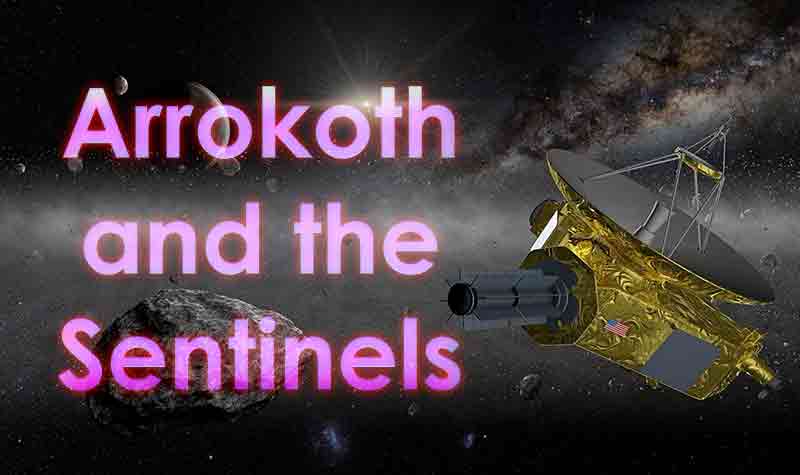
The early Solar System remains poorly understood, but as we learn more, our understanding deepens. Missions sent to investigate distant worlds provide crucial details, and the more sophisticated our probes are to study them, the better our comprehension. In 2006, New Horizons was launched on a mission to study Pluto, its moon Charon, and any other smaller moons that might be discovered along the way. But it was clear that other more remote targets should also be sought with a view to observing these tiny frozen worlds close-up. Being extremely old and unaltered, these ancient relics of the Solar System might hold the key to our understanding of planetary formation.
Note that this talk is on a Thursday. Everyone welcome. Non-members £3.
13th October 2023Observing EveningVillage Hall, Arlington BN26 6RX
A joint meeting at Arlington Village Hall with our friends from Eastbourne Astronomical Society. An opportunity to find out how to use your telescope, and to ask questions. You're welcome to bring along your own telescope. If the weather permits, we'll step outside for some practical observing. 8pm until 10pm. Strictly members only.
4th October 2023Stellar NucleosynthesisProf Hal SosabowskiTown Hall, Lewes BN7 2QS
Prof Hal Sosabowski from the University of Brighton begins with an introduction to the Big Bang, presenting compelling evidence that supports the theory. The origin of the elements is considered, clarifying the distinction between fission and fusion, and why it matters. The life cycle of stars is reviewed with a passing nod to Hertzsprung–Russell diagrams and our Sun's place within the stellar hierarchy. Finally, we'll enjoy a tour of the darker reaches of the Periodic Table, unpicking the relative abundance of the elements and how this underpins the Big Bang theory. Everyone welcome. Non-members £3.
6th September 2023Mapping the Universe with EuclidDr Stephen WilkinsTown Hall, Lewes BN7 2QS
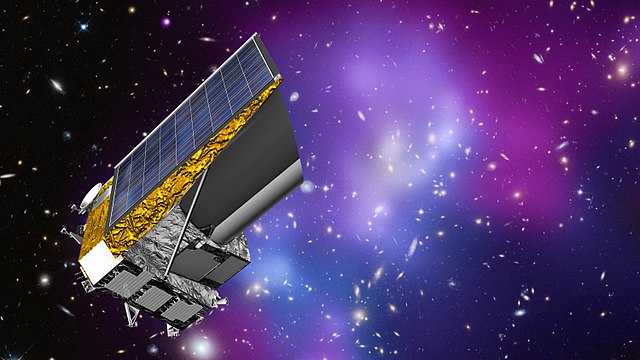
Hot on the heels of JWST is ESA's Euclid telescope which successfully launched on 1st July. While significantly smaller than its cousin, Euclid has a much wider field-of-view allowing it to map huge areas of the sky. In fact, during its 5 year mission Euclid will map a third of the sky at Hubble resolution in the visible and near-IR. The huge area mapped by Euclid will allow cosmologists and astronomers to study the nature of dark energy and dark matter, as well as identify rare objects potentially missed by narrower surveys. Everyone is welcome to this talk by Dr Stephen Wilkins. Non-members £3.
Add to calendar: Google | Outlook
2022 to 2023 season
Click on an event heading to see the full details of that event.
20th June 2023Summer Solstice 2023 Outdoor EventMalling Down Nature Reserve
Once again, we are holding a free and informal gathering on the Lewes downland to celebrate the Summer Solstice, which this year falls on Thursday 20th June. Weather permitting, we will have the opportunity to enjoy the breathtaking view of the Ouse Valley while the sun goes down. See our Summer Solstice webpage for full details.
7th June 2023AGM and A Beginner's Guide to CosmologyKate LandTown Hall, Lewes BN7 2QS
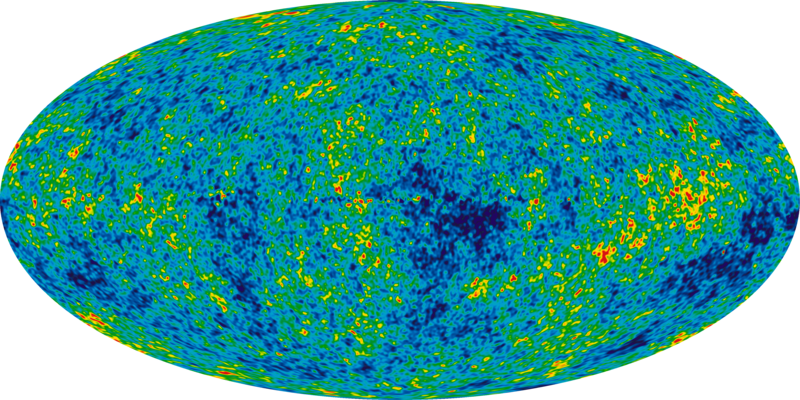
Following our AGM to which everyone is invited, Dr Kate Land presents an introduction to cosmology and the insights gained from studying the cosmic microwave background (CMB). Her talk provides a fascinating overview of our current understanding of the Universe and the groundbreaking discoveries that have been made in recent decades, including fluctuations in the CMB, inflation in the early Universe, and the distribution of matter and energy. Everyone is welcome. Non-members £3.
Add to Google Calendar
3rd May 2023A personal journey into astronomy and imagingDoug EdworthyTown Hall, Lewes BN7 2QS
Doug Edworthy (FRAS) served as Chair of the East Sussex Astronomical Society from September 2017 until February 2023. His talk takes us on a personal journey into the world of astronomy and imaging. From the age of four, he was captivated by the mysteries and wonders of space. He tells us about the various influences that ignited his passion for astronomy as well as the inspiring individuals who instilled in him a curiosity for the cosmos.
In this talk, Doug candidly shares the experiences and challenges of pursuing his hobby. From initially not having a clue to becoming a reasonably competent astrophotographer, he recounts his evolution in understanding and knowledge of the subject.
However, Doug warns that pursuing astronomy as a hobby can have a significant impact on your bank balance. If you get bitten by the bug, say goodbye to your savings! Despite the cost, Doug has enjoyed a lifelong love for astronomy, although he admits he has recently regressed back to binocular astronomy.
Doug's talk is an inspirational and informative journey into the world of astronomy and imaging. Everyone is welcome. Non-members £3.
Add to Google Calendar
5th April 2023ArchaeoastronomyCarina GarlandTown Hall, Lewes BN7 2QS
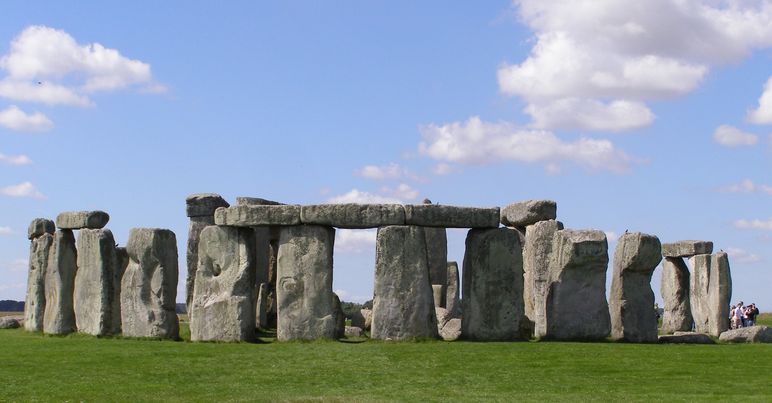
Archaeoastronomy is an interdisciplinary field that brings together archaeology, history, astronomy, and ethnoastronomy to uncover and interpret how ancient civilisations understood and utilised astronomy. Archaeologist Carina Garland (BA, MA) will present a fascinating talk on how the people of the past used the sky to navigate their lives and deaths. She explains how, by studying prehistoric sites such as Stonehenge, researchers have made significant contributions to our understanding of the astronomical knowledge and practices of ancient cultures, leading to a greater appreciation of their daily lives and beliefs. Everyone is welcome. Non-members £3.
10th March 2023Introduction to AstrophotographyTerry WebbVillage Hall, Arlington BN26 6RX
A joint meeting at Arlington Village Hall with our friends from Eastbourne Astronomical Society. The evening will kick off at 8pm with a talk by Terry Webb about astrophotography, followed by information on what can currently be seen in the night sky. If the weather permits, we'll step outside for some observing, but if it's not clear, we'll have a general discussion and offer practical advice instead. These meetings are perfect for those who want to learn how to use telescopes, what you can expect to see, and gain some hands-on experience. Members only.
1st March 2023The rise and fall of an observatory at HerstmonceuxKeith BrackenboroughTown Hall, Lewes BN7 2QS
Keith Brackenborough, chairman of the Eastbourne Astronomical Society, will talk about the history of the Royal Greenwich Observatory (RGO) during its tenure at Herstmonceux Castle, near Hailsham, in the latter half of the 20th century.
Herstmonceux was the home of the RGO from 1948 until 1990. The observatory was equipped with many telescopes, including the Isaac Newton 98-inch reflector, and had about 150 staff. In the 1960s, the Thompson 26-inch refractor was used by Sir Patrick Moore to map the lunar surface for the NASA moon landings.
The observatory was used for a wide range of astronomical research, including observations of stars and galaxies, as well as solar system studies. It played a key role in the development of astrophysics and provided valuable data that was used in many important astronomical discoveries, such as finding the first black hole, Cygnus X-1.
Everyone is welcome. Non-members £3.
1st February 2023Satellite megaconstellations and their impact on astronomy todayDr Robert MasseyTown Hall, Lewes BN7 2QS
66 years ago the Soviet Union placed the first satellite in space. There are now over 5,000 satellites in low-Earth orbit (LEO), the region up to 2,000 km above the ground, and their deployment is accelerating. 2019 saw the launch of Starlink, a satellite constellation built and launched by SpaceX, a system that on its own could soon have more than 30,000 spacecraft deployed. With other operators we could see up to 300,000 satellites in LEO by the end of this decade.
This is nothing less than a step change in our use of space. And like most paradigm shifts, it will have significant consequences. A key example is how it will affect the science of astronomy and our view of the sky. Some estimates suggest that as many as 1 in 10 'stars' visible could be man-made satellites, and professional and amateur astronomers alike now face significant challenges to their work. As a result our community has mobilised, working at a national, international and global level to tackle a complex problem, and to try to find a balance between the positive results of boosting communications and the impact on the space environment.
Dr Robert Massey, deputy director at the Royal Astronomical Society, will set out the problem, what it means for scientists and the wider public, and what we can do about it. Everyone is welcome. Non-members £3.
20th January 2023How to set up and use your telescopeTerry WebbVillage Hall, Arlington BN26 6RX
A joint meeting at Arlington Village Hall with our friends from Eastbourne Astronomical Society. Bring along your own telescope if you would like help learning how to use it. 8pm until 10pm. Members only.
7th December 2022An evening of short talks by our own membersVarious LAS MembersTown Hall, Lewes BN7 2QS
For the final LAS meeting of the year, we present an informal evening of space news and short talks from our own members. Meet other people who share an interest in astronomy and space-related topics. Everyone is welcome. Complimentary hot drinks and mince pies available. As it's the festive season, we're giving away a copy of the Philips Stargazing 2023 guide book (RRP £6.99) to every LAS member. Come along, join our society and get your free copy!
25th November 2022How to use StellariumTerry WebbVillage Hall, Arlington BN26 6RX
A joint meeting at Arlington Village Hall with our friends from Eastbourne Astronomical Society. There will be a talk about using Stellarium software, followed by a chance to view the night sky using telescopes, weather permitting. 8pm until 10pm. Members only.
2nd November 2022First Light with the James Webb Space TelescopeDr Stephen WilkinsTown Hall, Lewes BN7 2QS
The James Webb Space Telescope, which launched on Christmas Day 2021, is the long-awaited successor to both the Hubble and Spitzer Space Telescopes. Webb is an international collaboration, featuring strong involvement from the UK. Ultimately, thousands of scientists around the world will use data from Webb to answer a wide range of scientific questions, from allowing us to identify the oldest stars and galaxies in the universe, to probing the atmospheres of alien planets.
21st October 2022What Telescope Should I Buy?Terry WebbVillage Hall, Arlington BN26 6RX
A joint meeting at Arlington Village Hall with our friends from Eastbourne Astronomical Society. There will be a short talk about what type of telescope to buy as a beginner, followed by observing through telescopes from 8pm to 10pm, weather permitting.
5th October 2022Twinkle, Twinkle Little SatelliteRichard ButchersTown Hall, Lewes BN7 2QS
A talk about the history of, and our growing reliance upon, the ever-increasing number of artificial satellites in orbit around the Earth.